info@jmrdlift.com
  +971 523693844
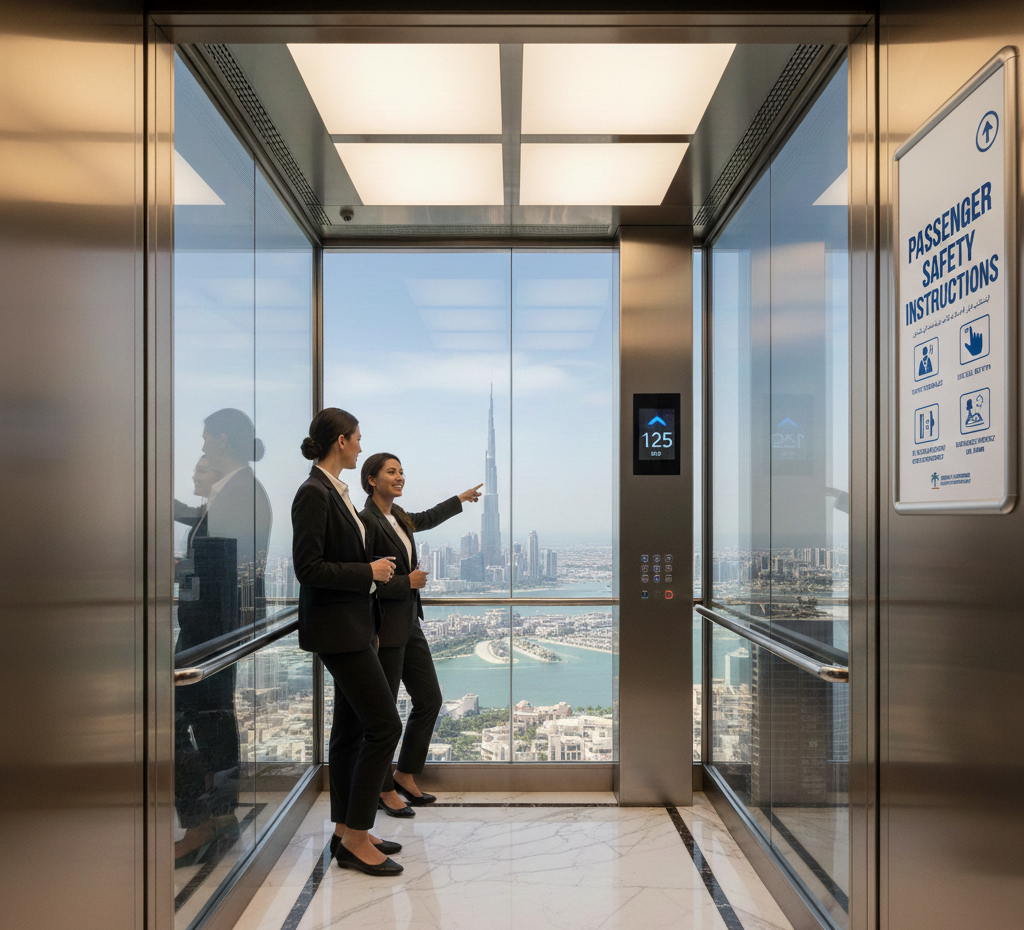
Passenger lifts are one of the safest and most convenient ways to move between floors, especially in residential towers, commercial buildings, malls, hospitals, and hotels. But like any machine used daily, elevators require proper safety awareness to prevent accidents, delays, and misuse.
Why Passenger Lift Safety Matters
Elevators carry hundreds—even thousands—of people every day. A single mistake such as overloading, forcing doors, or ignoring warning signs can cause unnecessary breakdowns or safety risks. Proper safety instructions protect:
- Passengers
- Children and elderly users
- People with disabilities
- Maintenance staff
- Building equipment
Good safety behaviour keeps the lift reliable, reduces repair costs, and extends equipment life.
Essential Passenger Lift Safety Instructions (Simple & Easy to Follow)
Below are the most important safety guidelines every passenger should follow, explained in clear, simple language.
1. Wait for the Lift to Stop Completely
Never try to rush into the lift while the doors are closing. Wait until the elevator comes to a full stop and the doors open completely.
2. Allow Passengers to Exit First
Stand aside and let people inside the lift exit before you enter. This prevents crowding and keeps movement smooth.
3. Don’t Overload the Lift
Every elevator has a maximum weight limit. Exceeding it can trigger alarms or stop the lift.
If the alarm sounds—someone needs to step out.
4. Avoid Blocking or Forcing the Doors
Do NOT use hands, bags, or objects to stop the doors from closing.
Lift doors have sensors, but forcing them can damage the mechanism and cause breakdowns.
4. Avoid Blocking or Forcing the Doors
Do NOT use hands, bags, or objects to stop the doors from closing.
Lift doors have sensors, but forcing them can damage the mechanism and cause breakdowns.
6. Hold Children and Assist People with Disabilities
Children should always be supervised.
If someone requires mobility support, ensure they enter and exit safely before you move.
7. Use Handrails When Available
Handrails add stability, especially during sudden stops or movement.
8. Do Not Jump or Play Inside the Lift
Jumping can cause the lift to stop, trigger alarms, or damage internal components.
Treat the lift as a moving vehicle—avoid unnecessary movements.
9. If the Lift Stops Between Floors: Stay Calm
Never try to force open the doors or exit on your own.
Use the emergency button or intercom to contact building security or lift technicians.
Help will arrive quickly.
10. Report Abnormal Sounds or Movements
If you notice:
- Jerky movement
- Strange noises
- Flickering lights
- Slow door operation
Inform building management immediately.
Early reporting prevents bigger issues.
Safety Tips for Building Owners & Facility Managers
Here are simple, practical steps to ensure the lift remains safe:
✔ Install clear safety signage inside the lift
✔ Conduct regular inspection and preventive maintenance
✔ Train staff on emergency lift procedures
✔ Keep emergency communication systems active
✔ Ensure weight limit information is visible
✔ Arrange annual safety certification
A well-maintained lift greatly reduces the risk of accidents and breakdowns.
Passenger Lift Etiquette
- Avoid loud conversations inside the lift
- Keep the lift clean and odor-free
- Don’t handle wet or dripping items inside
- Hold the handrail during movement
- Step aside if someone needs extra space
Good etiquette improves passenger comfort and creates a pleasant experience for everyone.
Passenger lifts are among the safest and most reliable modern conveniences—as long as users follow simple safety instructions. Whether you’re in a residential tower, office building, or shopping mall, responsible lift usage protects both passengers and equipment.
By following these safety instructions and keeping lifts well-maintained, building owners and users can ensure every ride is smooth, comfortable, and safe.