info@jmrdlift.com
  +971 523693844
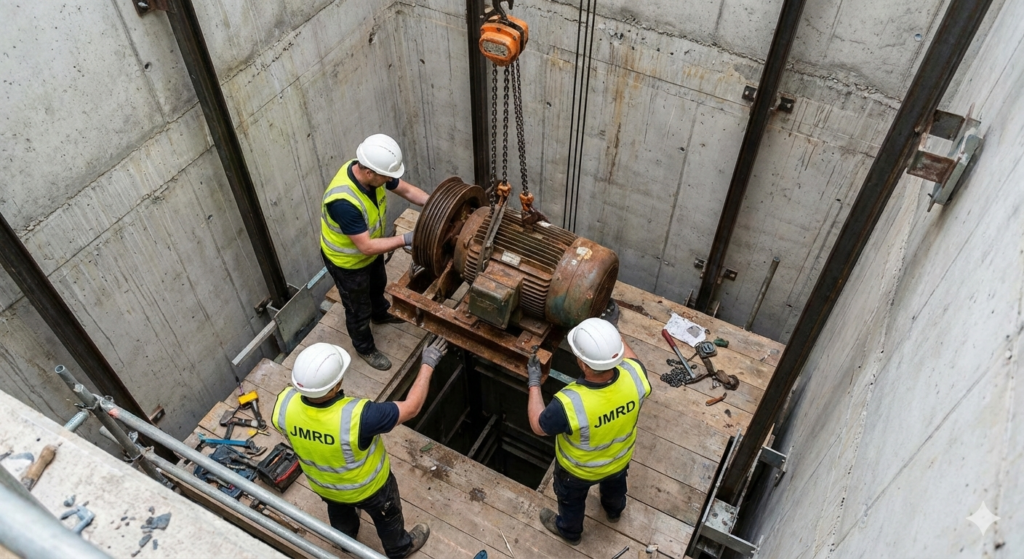
Elevator dismantling refers to the controlled removal of an entire elevator system from a building. Whether due to modernization, structural changes, or replacement, elevator dismantling must be performed with precision and safety at every stage.
What Is Elevator Dismantling?
Elevator dismantling includes the removal of:
- Elevator car and sling
- Traction or hydraulic systems
- Counterweights and guide rails
- Landing doors and frames
- Control panels and electrical systems
Each step is executed to avoid shaft or building damage.
Common Reasons for Elevator Dismantling
- Replacement with modern elevator systems
- Non-compliance with safety standards
- Structural redevelopment
- Frequent breakdowns and high maintenance costs
- Change in building usage
Elevator Dismantling Process Explained
- Site inspection and risk assessment
- Electrical isolation and permit approval
- Removal of cabin and counterweight
- Dismantling of rails, ropes, and doors
- Machine room equipment removal
- Shaft clearance and debris removal
- Final safety inspection
Safety Standards During Elevator Dismantling
- Controlled lifting and rigging
- Fire and electrical safety compliance
- Fall arrest systems
- Secured access to shaft
- Certified dismantling technicians
Benefits of Proper Elevator Dismantling
- Safe transition to new elevator installation
- Reduced liability risks
- Clean and ready shaft conditions
- Environmental-friendly material disposal
Elevator dismantling is not just removal—it’s a safety-critical engineering task. Proper planning and execution ensure smooth project completion and prepare the building for future vertical transport solutions.