info@jmrdlift.com
  +971 523693844
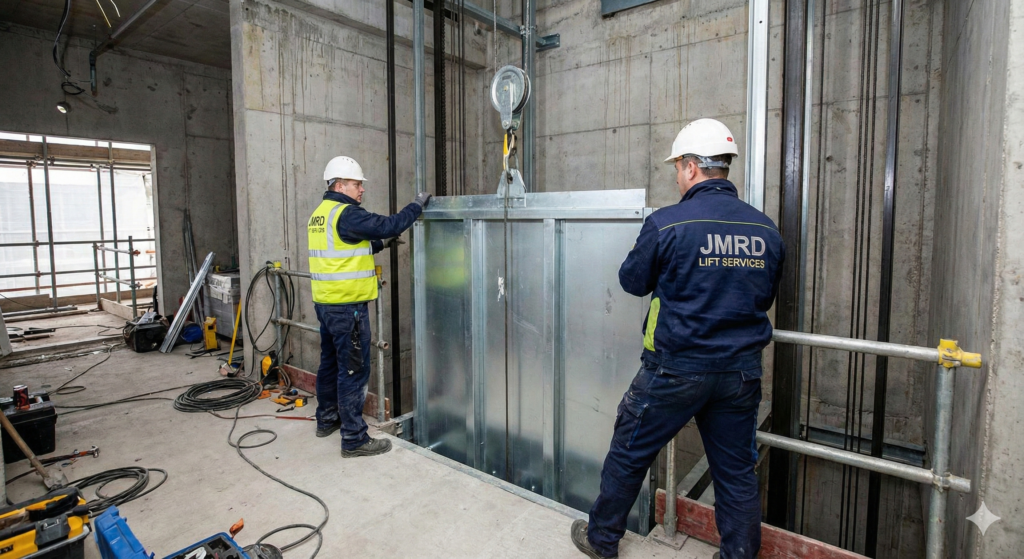
Installing an elevator is a major investment that improves accessibility, safety, and convenience for any building. But to ensure a smooth and compliant installation, you need a clear and practical elevator installation checklist. Whether you’re a property owner, contractor, or facility manager, this checklist helps you avoid delays, reduce mistakes, and meet all safety and regulatory requirements.
1. Pre-Installation Planning
Before any work begins, confirm the essentials:
- Building type (villa, residential, commercial, industrial)
- Purpose of the elevator (passenger, home lift, hospital, service)
- Required capacity and travel height
- Budget allocation and timeline
- Compliance with local building and lift regulations
This step ensures you select the right lift system for your building’s needs.
2. Site Assessment & Measurements
A professional engineer must inspect:
- Shaft dimensions
- Pit depth
- Headroom availability
- Electrical supply
- Structural strength of walls
- Emergency access points
Accurate measurements are the backbone of a safe lift installation.
3. Civil Work Preparation
Before elevator components arrive, complete all civil requirements:
- Construct the lift shaft as per approved drawings
- Ensure correct pit construction
- Install proper ventilation
- Provide conduit pathways for electrical wiring
- Maintain correct opening sizes for landing doors
Proper civil work avoids alignment issues and installation delays.
4. Power Supply & Electrical Readiness
Your elevator needs a stable and dedicated electrical setup:
- Three-phase or single-phase availability
- Panel board readiness
- Earthing and grounding
- Backup power arrangements (if needed)
- Space for machine room or controller
This ensures smooth lift operation from day one.
5. Delivery & Inspection of Elevator Components
Once components reach the site, verify:
- Guide rails
- Car frame and cabin
- Doors and operators
- Machine or motor
- Control panel
- Safety gear and sensors
Checking materials prevents installation issues later.
6. Mechanical Installation Checklist
During installation, technicians should:
- Fix guide rails securely
- Install car frame and cabin
- Mount door mechanisms
- Set up counterweights
- Install the driving system
- Ensure accurate alignment
Mechanical accuracy guarantees smooth ride quality and safety.
7. Electrical & Control System Installation
The elevator’s intelligence comes next:
- Controller and wiring setup
- Testing safety circuits
- Installing floor indicators
- Setting call buttons & emergency systems
- Connecting ARD (Automatic Rescue Device)
- Configuring sensors and limit switches
This step ensures stability, reliability, and user safety.
8. Safety Testing & Commissioning
Before handover, the elevator must pass a full safety checklist:
- Load test
- Speed test
- Brake test
- Emergency stop and alarm
- Door safety sensors
- Leveling accuracy
- Ride comfort testing
Only after successful testing is the elevator ready for operation.
9. Final Handover & Documentation
At the end of installation, you should receive:
- Operation manual
- Safety instructions
- Warranty papers
- Maintenance schedule
- Compliance certification (if required)
This ensures building owners and users know how to operate and maintain the lift properly.
10. Maintenance Checklist (Post-Installation)
Your installation checklist isn’t complete without long-term care:
- Lubrication and cleaning of parts
- Door alignment and noise checks
- Controller health monitoring
- ARD testing
- Cable tension checks
- Emergency system inspection
Regular maintenance extends lift life and ensures reliable performance.
A clear and structured elevator installation checklist saves time, avoids costly mistakes, and ensures your lift is safe, compliant, and built to last. Whether you’re installing a lift in a home or a commercial building, following this checklist helps ensure a smooth, problem-free installation from start to finish.